The Wildbiome Project: Week 2

Something Fishy Going On. Disaster!
What do love, cancer, botulism, talking trees, and forgotten jars in the back of a cupboard have in common? Apparently, week two of the Wildbiome Project.
What began as a hopeful simmer of wild seafood turned into something much stranger—a journey through gut instincts, missteps, memory, and meaning. This week, I stir the pot of experience: culinary improvisation, emotional weather, tree encounters, and the quiet drama of digestion. Alongside the practical challenges of eating wildly, deeper undercurrents rise—grief, healing, connection, and the strange poetry of trying to live in sync with something older and wilder than modern life allows.
This isn’t just about what I ate. It’s about what fermented, what surfaced, and what refuses to stay buried.
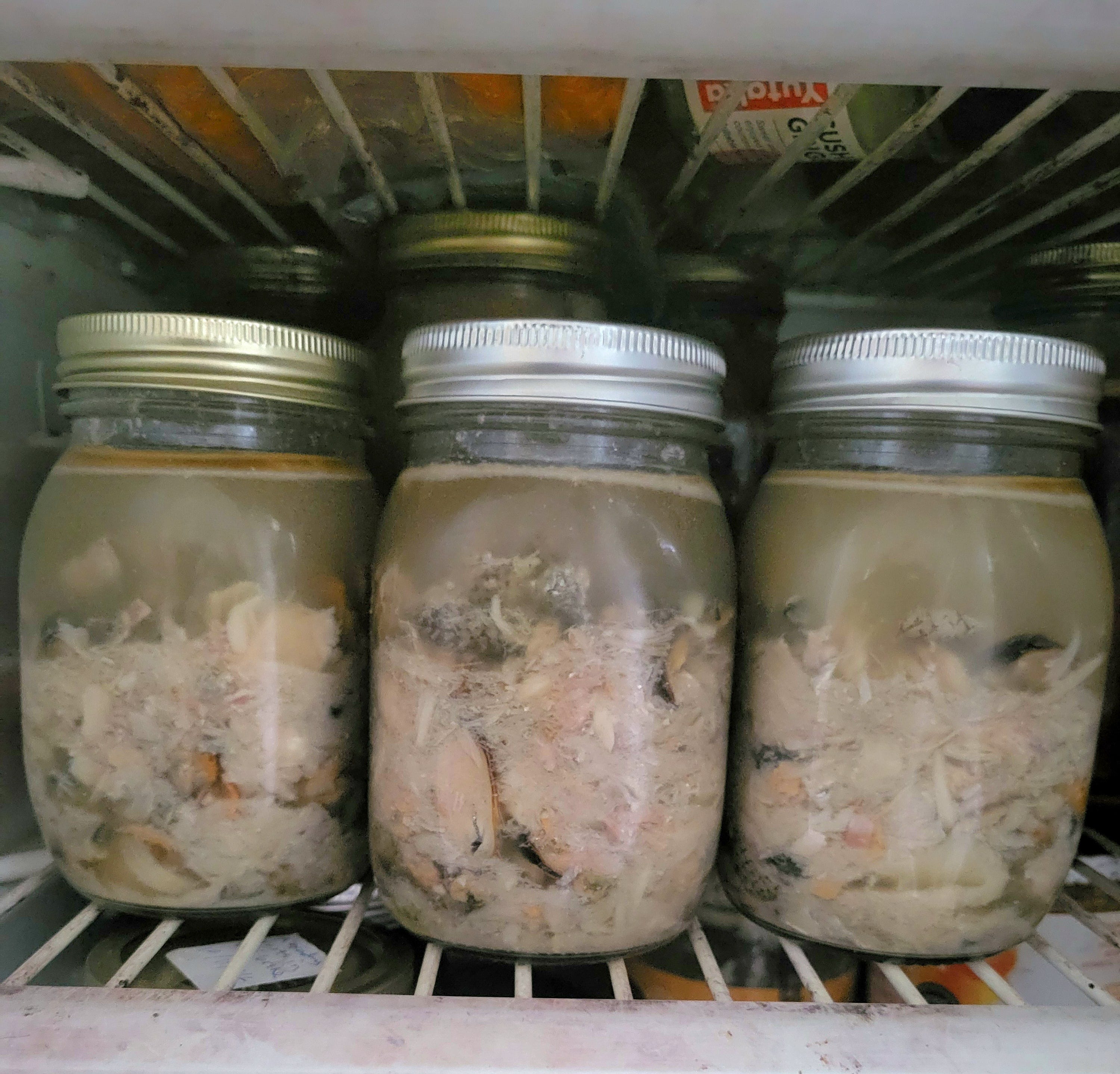
Fish/Seafood Soup/Stew: Whelks, cockles, mussels, sand sole, dover sole, skate wings, hake, haddock, scallops, stock made with the fish heads, bones and skin, and botulism?
Those who are vaguely aware I’m taking part in the 3-month wildbiome project (which, for simplicity’s sake, most participants refer to as eating solely wild food for 3 months), would be forgiven for thinking that buying any items from the shops is somehow a bit fishy, a bit of a cheat. That would be the case, no doubt, if the remit of this project was to live wild as well, to live paleolithicly, mesolithicly or neolithically, only using ancient technologies, only gathering from the unique repertoire of plants, seaweeds, and fungi available in the UK thousands of years ago. A fun and fascinating project that would be, but a very different project.
The wildbiome project is more nuanced. It is about foraging and sourcing locally and, ideally, seasonally available wild foods as part of a research study that maps the physiological changes of eating an exclusively wild diet, with a particular focus on the gut microbiome. However, “wild” here does allow for some shop purchased items, for example venison tallow, fish locally caught and in season, and, at a stretch perhaps some organic local hazelnuts. Some foods gathered wild, especially those growing feral won’t have been around in the Stone-age, at least in the UK, for instance, sweet chestnuts, walnuts, Alexanders, sweet cicely (all Roman introductions), and, more ferally, at least in southern England, Darwin’s barberry and Staghorn sumac, but these can be foraged too.
That is why, on 1st April I wanted something fishy, fishy in a good way, in the more positive sense of that dual connotated term, so I spent £90 at my local fishmonger on whelks, cockles, mussels, sand sole, dover sole, skate wings, hake, haddock, and scallops. I wanted some ready-to-go super nutritious meals to which I could just add something fresh like a seasonal salad or vegetables such as nettles or sea spaghetti. There was just one problem, and this has been one of the greatest challenges every day for the past 2 weeks: time management AND organisation. These are, of course, very much entwined. In this case, I was up to 11pm on day one prepping the fish. That would have then required another 90 mins at 10 psi in the pressure cooker, as well as another 20 mins for the cooker to return to 0 psi so the lid could be opened. I was tired and wanted to go to bed, not stay up until 1am. The following day I had a 24 hr care shift supporting an autistic young man, so decided to take all the now cooked ingredients there to finish of the process. BUT, in my haste to leave the following morning. I forgot to take the pressure cooker!


On arrival, I made an unwise because potentially dangerous decision. I reheated everything, added it all to the jars, with Joshua’s help, and set them to sterilize in the oven at 100 degrees celsius for 2 hours. Sterilizing this way, one may get lucky, and with higher salt and acidity foods it would almost certainly work. In this case it was a risky business, botulism being the bullet in the revolver of this particular gamble’s gun
The result.
On day 3 I opened one of these. I was hungry, made increasingly so by the amazing food being cooked for a 60-person feast of a dinner at my house.The liquid was runny. It smelt off. Hunger said, “Don’t worry, just eat it.” Common sense said, “If it smells like sewage, make it sewage, chuck it down the loo”. Hunger won.
On day 8 I ate another. This time it smelt good and was set solid
I brought something fishy, on the positive side of that connotation, and flipped it over to the negative side.
Three remain, all set solid. If I open them they’ll smell good. That though, tells me nothing about whether or not botulism is present. Russian roulette just got fishy. Do I dare play the game?……….
Breakfast; Sweet, savoury or inbetween?
For 10 months now, I’ve eaten only savoury breakfasts. Indeed, I’ve been on a low carb, but not quite keto diet for all that time. I was diagnosed with prostate cancer a few years ago. It eats away at bodies, at relationships, at future plans. Complications and treatments mean you can shit your pants or stand indignantly in a warm pool of piss, but you hide that from the world of course, from others, from those you love, whose plans, anyway, no-longer include you but rather, and instead, new loves in new lands. The cancer spread to a lymph node very close to my kidney, and in spite of radiation treatment and 6 months of its favourite breakfast, testosterone, being removed from the menu, it still hungers, indeed, perhaps hungers more, and has its own plans, as do I……….
More on cancer another time, suffice to say, for now, that sugar may also fuel it’s growth. For this reason I had considerable hesitation about participating in this project. For 10 months I’ve really enjoyed my food, and perhaps have never eaten such a nourishing vitality giving menu. Nearly all has been organic, some wild, lots of fish, huge complex and delicious salads, but no rice, pasta, bread, potatoes, no fruit, fruit juice, or honey. In short, no excess sugar. The thought of switching to a more carby diet which, apart from its counterpart of meat and fish, might also include acorns, chestnuts, rosehips, blackberries, and birch syrup, irrespective of their non-sugar health promoting properties, had absolutely no appeal. On the other hand, two years ago, and after two weeks, I had to drop out of the wildbiome project’s first installment due to post prostate surgery complications. A rip in the stitching where my urethra had been reconnected to my bladder after prostate removal, led to urine leaking out, pooling deep inside me, festering and stagnant, ultimately leading to such an excruciatingly painful infection that I couldn’t walk. I felt that, in wiping out my gut flora due to taking antibiotics for almost 2 months, my participation was, in anycase, somewhat pointless, even though, thankfully, I could walk pain free again in a fairly short time.
Yet, in some ways I was mistaken. In spite of my introversion and reclusive tendencies, a key reason for participation, above and beyond discovering anything interesting about gut health and other physiological impacts of a wild diet, is the connective aspect. The tribe, the community, although dispersed in modern times, and although often mediated through the worlds of zoom, facebook, Whatsapp groups, texts and phone calls, still exists. Its pull is magnetic, striking a resonant chord on the heart stings of a love buried, almost lost, deep in the marrow of ones bones, that wants to be in community, the community that is a connecting and shared mutual experience of possession and being possessed by plants, by nature, being possessed in love by and for the earth, rooted, present, real, authentic, growing, dying, living, expressing, creating, flowing together here, now, in this fragile and fleeting moment.
This then, is one reason you find me eating chestnut porridge, a porridge the slight sweetness of which has been disguised to accommodate my carb-reluctant pallet through the inclusion of rich venison stock, salt, and a duck egg acquired from a friend’s sofa, gently deposited there after being tenderly grasped in the jaws of her egg forager-thief basset hound. I was optimistic it would taste good, and was right to be.
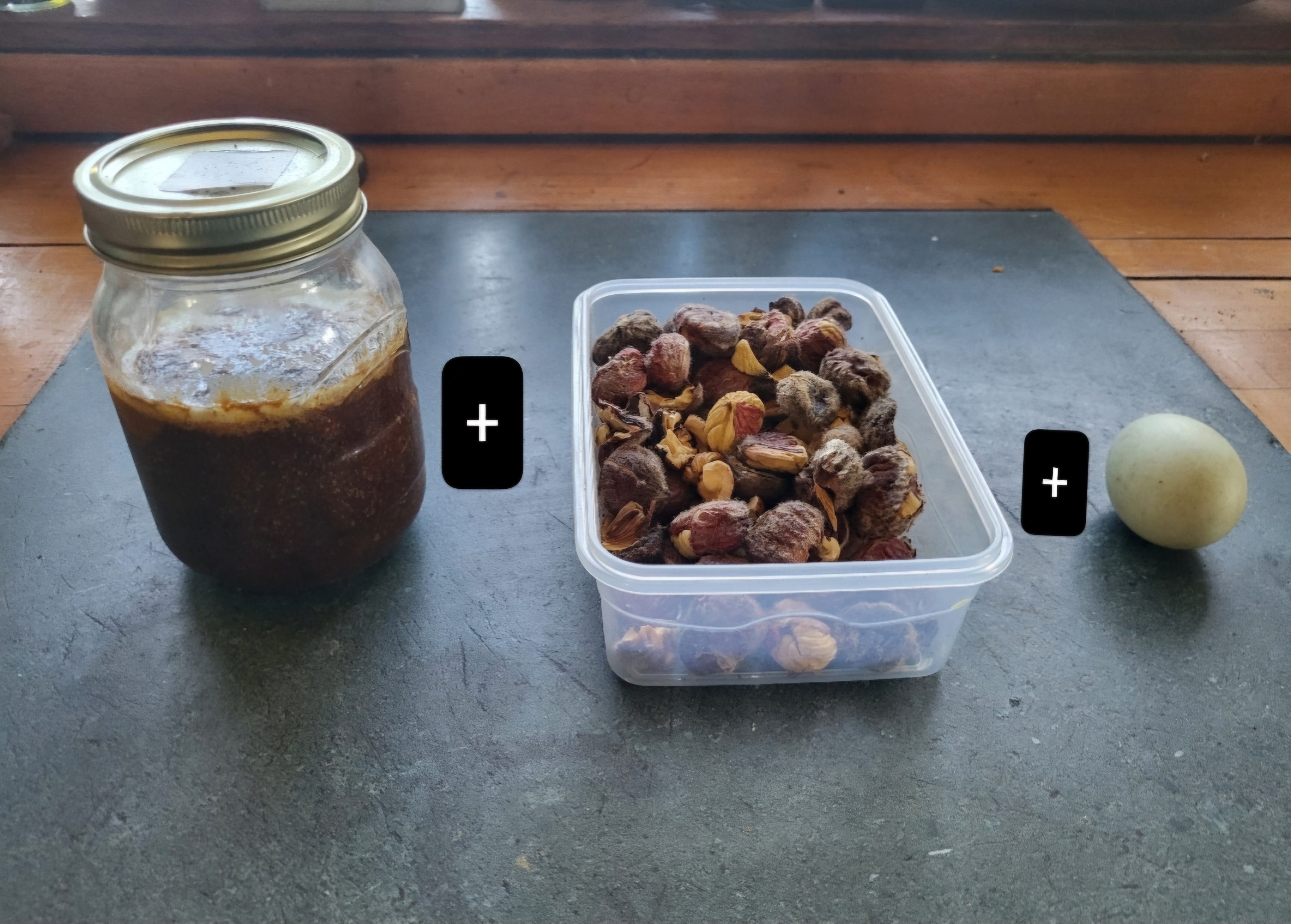
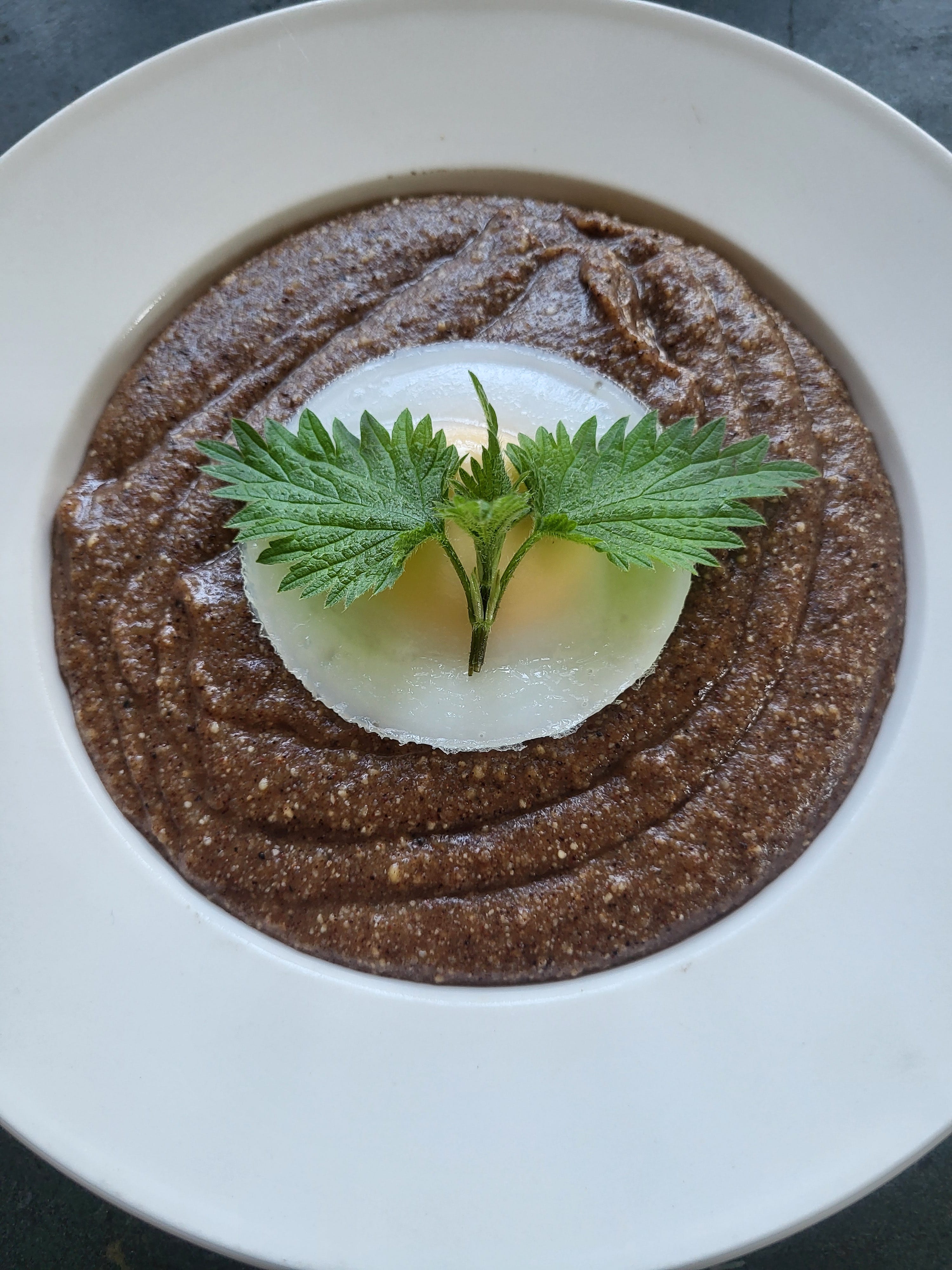
Although one can have breakfast in bed, one cannot eat it in sleep, even though there may be dreams of doing so. First one must get up, perhaps draw back the curtains if that helps one feel more awake. This is obvious.
Awakenings can occur in an instant, a startling flash of awareness that fully floods ones being or, from a painful trigger point, it may slowly grow, a gentle sunrise of steadily increasing luminosity. Unable to fully escape the resulting shadows cast, to get out of ones own way, sleep may return. At least for now, the senses are heightened, Wisdom would have me linger here a while, at this seam of pain and conflict, mining the depths, revealing the gold, escaping before the makeshift tunnel’s collapse. There is kintsugi of the heart, kintsugi of the soul to be done here, as well, ultimately, as cord cutting surgery.
Allowing oneself to be kept emotionally tethered for two months leaves its mark, perhaps an indelible one?
They say that cancer is a great teacher, cancer in its overt physical reality, but also emotional and spiritual cancer, themselves no mere metaphor, yet cancer, too, as metaphor, though really it is never ‘mere’. Irrespective, there are lessons here for this slow learner.
To learn one must observe, one must feel. For deeply personal reasons, I find myself, indeed am allowing myself, to be sucked into a vortex of pain, a tumult of rage, remorse, despair, anger, grief, resentment, sense of betrayal, a toxic emotional cancer that soon needs lancing, cauterising or transmuting in some impossible and implausible way, to leave not scars, an indelible mark nor armour but, instead, the patina of existence, the gift and honor to have lived and felt both the joys and sorrows of being, a beautiful patina even, but one that can only be seen retrospectively, the future self squinting from an incomprehensible distance, looking back through time. The nature of reality and inner worlds finds me far from that place. It cannot be seen from this vantage point, its existence merely postulated. From there, to look back, observe, and feel, one can only well-up in love, loving her still, but now with a love that does not covert, it accepts, lets go, celebrates the flower as it blooms again. I am there, in this place, then not, then there again, sometimes standing on solid ground, sometimes floating or seized by the waves, drowning and gasping for air as I gain and lose the life saving wooden ballast tossed by the wild unforgiving storm, the raging sea within. The complexity of mixed post-break up emotions swirling in my heart threaten to consume my whole being. I feel vulnerable, weak, and ill-equipped to take my stand. But here I am……
I speak of betrayal, but, perhaps it was not betrayal by another, but betrayal of the offering itself. Love came—again and again—not with fanfare, but in quiet gestures, patient presences, moments of touch and tenderness that asked nothing more than my full attention. Love arrived not once, but repeatedly, like a tide returning to the same shore, hoping this time I might be there to greet it.
And I—I was distracted, weary, tangled not so much in grief for love lost, but in something quieter and more difficult to name. A mourning, perhaps, for the loss of function, of manhood, of identity—as though something vital had gone missing in the aftermath of prostate surgery, and I hadn’t yet learned how to live without it. I met love not with rejection, but with a presence compromised by pain. I was there, but not whole. Attentive, yet split. And that too is a kind of betrayal—not of another, but of what was being offered, and of what in me wished so much to receive it but could not fully show up.
I see now that not all betrayals are loud. Some are soft, like unopened letters. Some are missed moments, unnoticed gifts, silences too long sustained.
And yet, even in this sorrow, there is a strange grace. I did love. Perhaps still do—in a way that no longer asks to possess, but bows. A love that sees now what it could not see then. A love that lets go, not to discard, but to honour.
Yes, now I am swirling, turning, disorientated, thrown out of the exquisite and ornate vessel that contained love, brought into being by love, that is and was love, full of wild fury I am, billowing hot air. In moments, there is stillness too. It is a poignant stillness held by captured snapshots of memory, scenes and moments recalled, not deserving of blame or shame, but witnessing, curiosity, questioning, and acknowledgement of responsibility. Dysfunction in a relationship is a dynamic, it is rarely if ever solely about what the other did or didn’t do, it is about ones own omissions too, one’s inattentiveness, one’s failing to water the seed of love, to tenderly cultivate its growth and strengthen its roots. Lessons.
Metaphors for these internal struggles show themselves externally, in both profound and mundane ways. And, as heavy as these words may seem, they meet a levity, a lightness bourne of the absurd, in a vortex forgotten, in a billowing rush of hot air. One can but laugh………..
The hardest thing can be to see what is really there. Perception is a tricky business. Being able to see the wood for the trees, the signs and symbols, can be extremely difficult. The tree and the wood remain undifferentiated in their own beingness, remaining as great mystery even as one attempts to conceptually separate them. Can one fully see that which claims it wants to be truly seen yet in reality wishes to remain hidden, shaded and shrouded in obscurity, invisible, unconscious? A tree’s wide spread canopy casts a large shadow. Does the magnificent tree swaying in the breeze, dancing in the sun with such eloquent grace know of the hidden rot within? Sometimes a branch may fall, crushing what stands in witness below. Although it may not feel so, it can be good to be broken.
When Trees Can Talk: The matter with things, confabulation of memory, encounter, and getting out of your own way.
Nine years ago, exiting the forest after traversing through on my way from home, near the Ashdown Forest Centre, and on towards town in forest row, found me on the open expanse of the golf course. And yet it felt more oppressive and enclosed than the woods themselves. My mood was glum, dark, brooding, moross even. I felt depressed. Having almost completed the trek through the green desert I started to hear laughing, a deep resonant belly laugh, although neither distant nor near, but rather issuing forth from the very air that surrounded me. Louder and louder it became, before the laughter stopped, and a deep voice asked in jocular tones, “Why are you so unhappy? Just be, just be, like me. See, I am, I am the tree!” Before this moment I had been too brooding and locked up inside myself to notice, but now I saw the trunk and splendidly spreading crown of the large oak about 100 meters ahead. Without a shred of doubt, I could hear and I knew this was the source of the question and of the laughter that had so immediately drawn me out of myself. As I approached something red caught my eye. On the trunk, a small red heart had been painted.
Neither before nor since have I heard a tree talk, at least not in such a clear, resonant and human sounding voice. Their leafy chatter or song, I hear daily. Especially, now, 100 m away, behind me as I type, and outside in the dark, I know that the large black poplar on the edge of the lawn will be busily talking to herself, to the fox who killed our chickens last week, to the moth on the wing, to the surrounding forest.
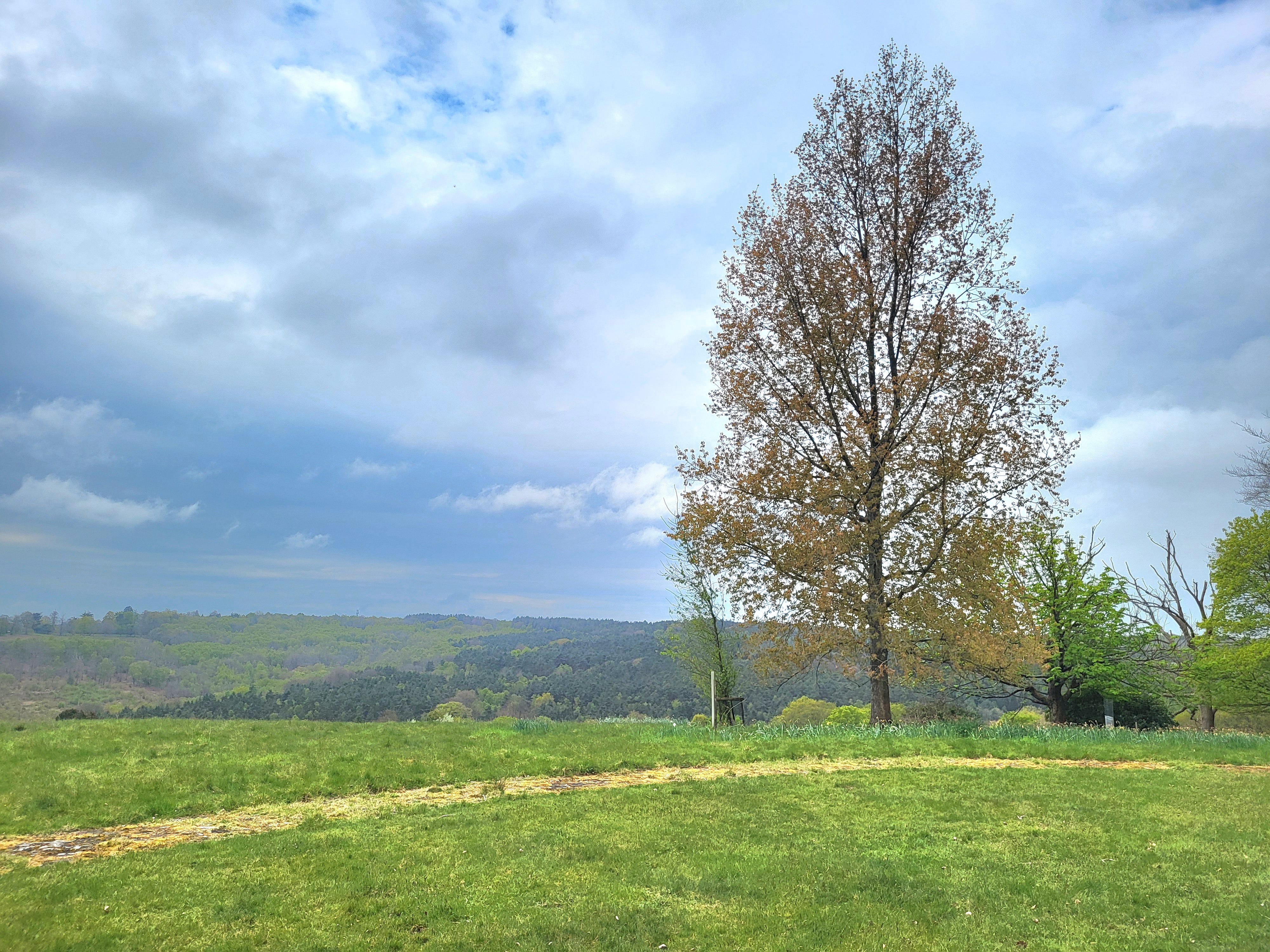
She stands on the threshold, the constructed boundary, a ha-ha whose wall remains hidden from view, such that from the house the adjacent ditch isn’t seen. This creates the coterminous illusion of uncontoured contiguity with the field behind, itself gently sloping down to the wooded valley beyond: the surrounding and sounded forest. Can you hear? Can you speak? Is there even any need? Upon crossing that further threshold, transitioning from light to dark, warm to cool, open to enclosed or, rather, open to embraced, stepping through the portal into the trees of that wooded valley, into the realm of badger, fox, mushroom, buzzard, wood ant, owl and deer, is the only other time I have experienced the trees talking. Although that isn’t quite accurate, in fact not accurate at all, instead, literally beyond words yet fully heard and understood is the better description. Now communication is direct, full bodied, reciprocal, a flowing force of direct knowing. The trees, the stream, fungi, bracken, insects, deer and birds have all vanished, because here there are no eyes to see or ears to hear. Encountered, I am, we are, there is, just this continuous breathing of the beinged earth here and now, living, dying, creatively unfolding upon and within this flowing moment, a moment that seems eternal or at least beyond time and space as normally experienced and perceived.
The large majestic pine stood next to the house. It was no ordinary house and no ordinary pine. This one had strong opinions about the house, as did I. What pine’s opinion was, nonetheless, remains uncertain and open to interpretation, but mine was clear: this was the house of my dreams, the one I’d been searching for all these years, my fantasy home. Just two problems, the first, and most obvious, was that in terms of ownership, it wasn’t mine, although remains mine in the imagination. Secondly, and more tragically, the whole place was due for demolition, eradication and destruction, to make way for the new, more modern. Such change would create an aesthetic vibe and general feel far removed from these open plan and wooden-planked homely perfections of a place, a home, an abode, a dwelling to happily indwell, as did the previous Buddhist occupant whose calm presence could still be felt.
I was here to visit Kit, to meet for the first time. She is one of the other 110 participants of the wildbiome project. For the house, her participation had lead to a temporary stay of execution, as she would be living in her father’s place for the 3-month duration of the project.
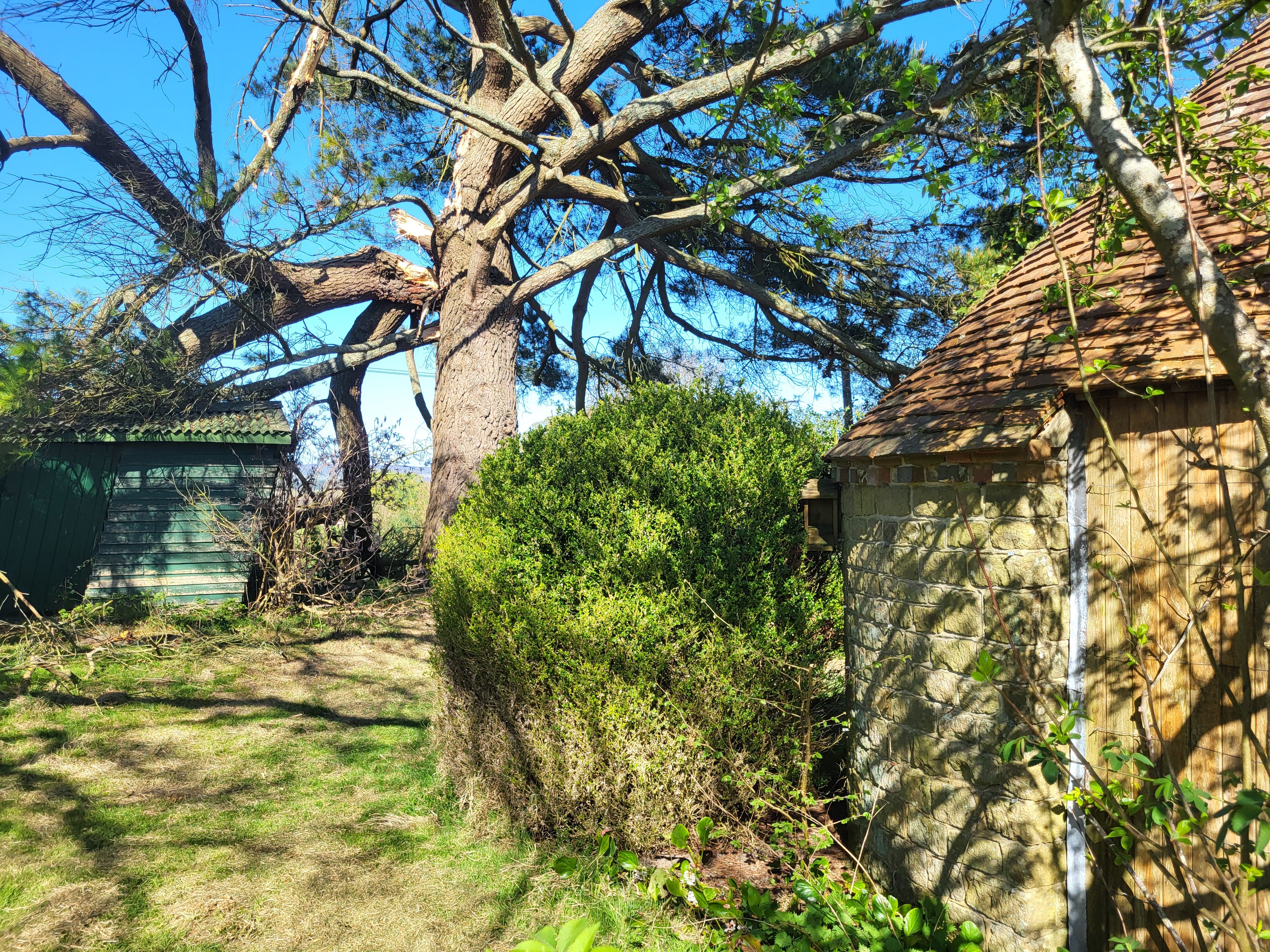
Not long after meeting, we walked behind the house, positioning ourselves between there and the towering pine half a dozen or so metres away. From this vantage point one could also view the garden and outbuildings, including a small wooden shed beneath the outstretched limbs of the pine, and beautifully (inside)) painted stone gazebo. I could tangibly feel the pine joining me in the act of surveyance. This feeling prompted my questions. “I wonder what the pine thinks of this, of the tearing down of such a beautiful place. The pine will be watch on as it happens”.
Who could be shooting so near by, a rifle at that, and just one shot? It made no sense, no sign of anybody, just me, Kit, and the pine. I must have misheard. I looked to the roof of the small shed beneath the shade of a large lower pine limb. Even though knowing that the sound of a dried pine cone falling on a wooden roof a few metres below would not produce such a sharp, clear, clean and tightly bound sound like a single rifle shot, it was the explanation I settled on as our conversation continued.
Kit had shot a wild and healthy deer for the first time. This is something I could not do, even though, only a few months before I had killed one. Tenderly as one caresses a lover, I gently began stroking her head and neck as she lay there. This had an immediate calming effect, stillness descended upon her previously panicky twitching and forlorn attempts to escape. For an hour she had lain there in the field, leg broken, hemorrhaging internally. Although only a short distance from the fence, in her state it would have been unwalkable. We had carefully dragged her there. About 2 hours before, Joe, my ex-housemate who lives very close by, had called to see if I could come and help. It is a tragic and brutal way to die, and hardly bares thinking about, especially when, exhausted from the night-long struggle to gain release, the fox has come, bloodily ripping at the tired but living flesh, painfully reigning in death, there standing looking on, dark and waiting. It could have happened that way here but didn’t. Perhaps in this case she hadn’t been there all night but had only tried to make the jump earlier that morning. Joe had found her, bodily contorted, leg extended, the top, just below the foot, around mid-shin, completely tight-bound in an incomprehensible way by the top line of barbed wire and the non-barbed wire just below, but at the top of the fence. The full weight of her body as it hung there, head barely touching the grass, had served only to increase the tension in the bind. Joe liftered her as my fingers uselessly worked at the wires. Wire cutters would be essential and, with any luck, after recovering from the shock it was possible that she’d make a full recovery. So we hoped. Alas, no. After cutting her free we had left her lying there in the field, still hoping.
Again, tenderly as one caresses a lover, I gently stroked her head and neck as she lay there. This had an immediate calming effect, stillness descended upon her previously panicky twitching and forlorn attempts to escape. Finally, placing my hand over my heart and the other over hers, I said a prayer. Our eyes connected, she knew, permission was given, there was love, gratitude in life’s final look. My sharp knife cut through her neck, arteries severed, and immediately on and through her spinal cord.
The connection or lack of one can make with another person, whether that personhood be in human, other animal, plant, rock, soil or other guise, has always fascinated me. Although longing for deep and meaningful connection, indeed any connection, I find it hard to connect. I wanted to know if, while looking at the deer through the sight of her rifle, and in that extended moment before finally pulling the trigger Kit had felt any connection with the deer.
Memory is a funny thing. It is not objective or impartial, and in recall it constructs new meanings in the present, although all the while trying to convince you, seamlessly in the background, that those combined images or long-play internal films do themselves have true validity and, likewise, are seamlessly woven together in an absolutely objective recalling of events. This is confabulation.
I started to recount something I had heard or read (indeed, the not knowing which one is an obvious clue here that confabulation was afoot). Schumacher College resident ecologist Stephen Harding, I recalled, had spoken about such a moment, an encounter. An encounter in which, viewed through the sight of a rifle, and at the moment before pulling the trigger, a connection had been made, he had witnessed the hair on the back of the deer’s neck stand up in that last second of life, an acknowledgement and recognition, perhaps acceptance even of imminent death. Perhaps somewhere and at sometime Stephen did say this or perhaps he didn’t. All I do know is that in writing this substack I wanted to share Stephen’s words about encounter. They describe a situation I know well but struggle to put into words as, I recalled, he so eloquently did. A search of my computer files brought up his exact words which, it turns out, I had transcribed some years ago from an interview I’d heard him give. There was no mention of a rifle. My memory which seemed so accurate was false, constructing new relevance and meaning in the moment. Fascinating. His actual recollection of encounter with a deer you can read below. But, let’s take a very quick detour…..
Taken from his collection of essays in Words of the Grew Wind,"Waxwings", like all of Chris Arthur’s essays, is well worth your time, it is a good read, and is a wide-ranging meditation on memory, including confabulation. I can’t always read those essays. Clever, insightful, revealing and intense, one needs to be in the right mood. In those moments, the reading of them nourishes deeply while simultaneously expanding the mind. Going back 30 years, Chris Arthur was, by far, my favourite tutor at university. There he taught Buddhism as well as Religion and the Media. I was fortunate to study both.
In Chris Arthur’s collection of essays the “binaries we wrestle with, and usually shrink from, surface and submerge ….. with an unfashionable candour: the metaphysical and the mundane, the commonplace and the miraculous, the physical and the spiritual, the accidental and the destined, the personal and the universal, the temporal and the eternal. Time and again the essayist seeks to resolve these oppositions as tie-breaks in the realm of some invisible other province. At the heart of the essays is a paradox: transcending of the self is sought through a relentless examination of the life.” (F
rom his 'Foreword' to Words of the Grey Wind, John Wilson Foster)
”Waxwings” examines a family photograph, a snapshot in time, a meeting of birds and memory, an encounter of sorts, if only retrospectively, as the radically connecting aspects of encounter are not merely spatial but also temporal, echoing through time.
It begins…… “Sometimes I think of the past as a shower of rain that’s fallen on a life. The wet sheen of the present perpetually drains into memory, from where it can be recalled - though never with the same glistening freshness of its original moments. A proportion of the water of immediate experience - which dries so soon into history - simply evaporates, we can never call it back. Some of it is stored straightforwardly enough in memory. A few of the droplets, though, seem to possess a special property. They slowly percolate through the mind, mostly unnoticed, even apparently forgotten. As they do so, they take on a weight they did not previously possess. Eventually, this heavy water reappears, defying the gravity of memory’s imprisoning absorbency. It emerges in the mind again and demands a place in our present reflections. Such irresistible rising damp, the past’s tangible echo fountaining within, turns our attention back to the time that minted it. But we see things now through a liquid lens that’s been distilled and clarified for years in the deep chamber of the psyche. The slow drip-drip of countless associations and influences, the touch of a whole slew of time’s varied denizens, the gentle abrasion of unseen reflection, has patiently ground this lens into its unique torque of concavity and thickness. The view it offers is magnified, distorted, changed - seen as through a film of newly discovered oil rather than through the pristine clarity of the original water.”
Continuing…….
”How far does any image of an afternoon in 1966 match what actually happened on that day? It would be nice to think that there’s a straightforward one-to-one correspondence between recall and event, that what I set down here by way of description is simply a truthful record of what happened and that any divergence between image and actuality is due only to the time that’s passed, or to my deficiencies as observer and chronicler. But I suspect the difficulty I have in setting down a clear account, where the contours of the words fit snugly across the topography of the moment, is much more deep rooted than anything that can be accounted for simply by appeal to individual fallibility or the mere span of time that has elapsed between then and now. It has more to do with the unequal relationship that exists between actuality and utterance, between experience and accounts of experience.”
We took a detour. Now let’s return to the gazebo…….
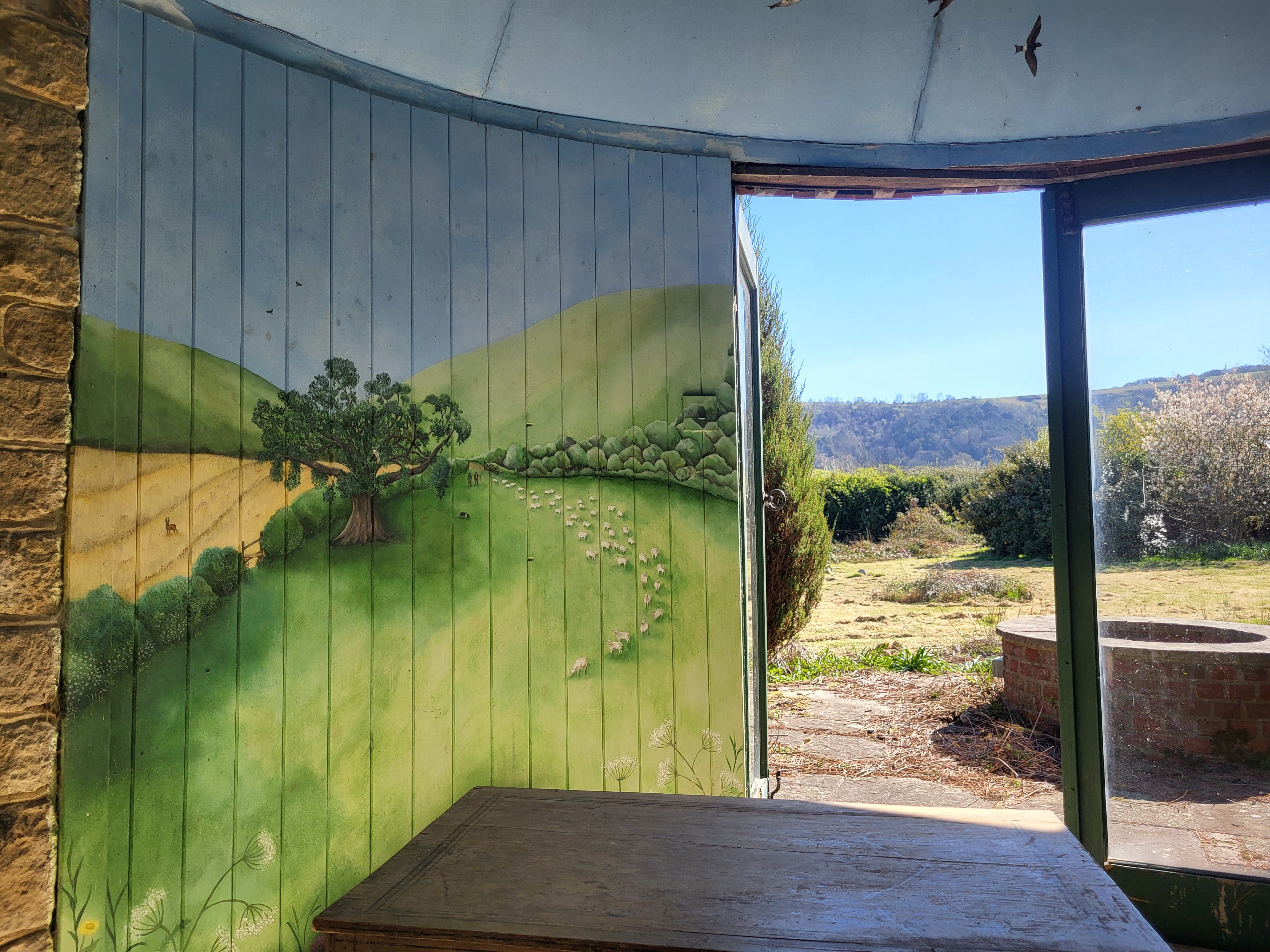
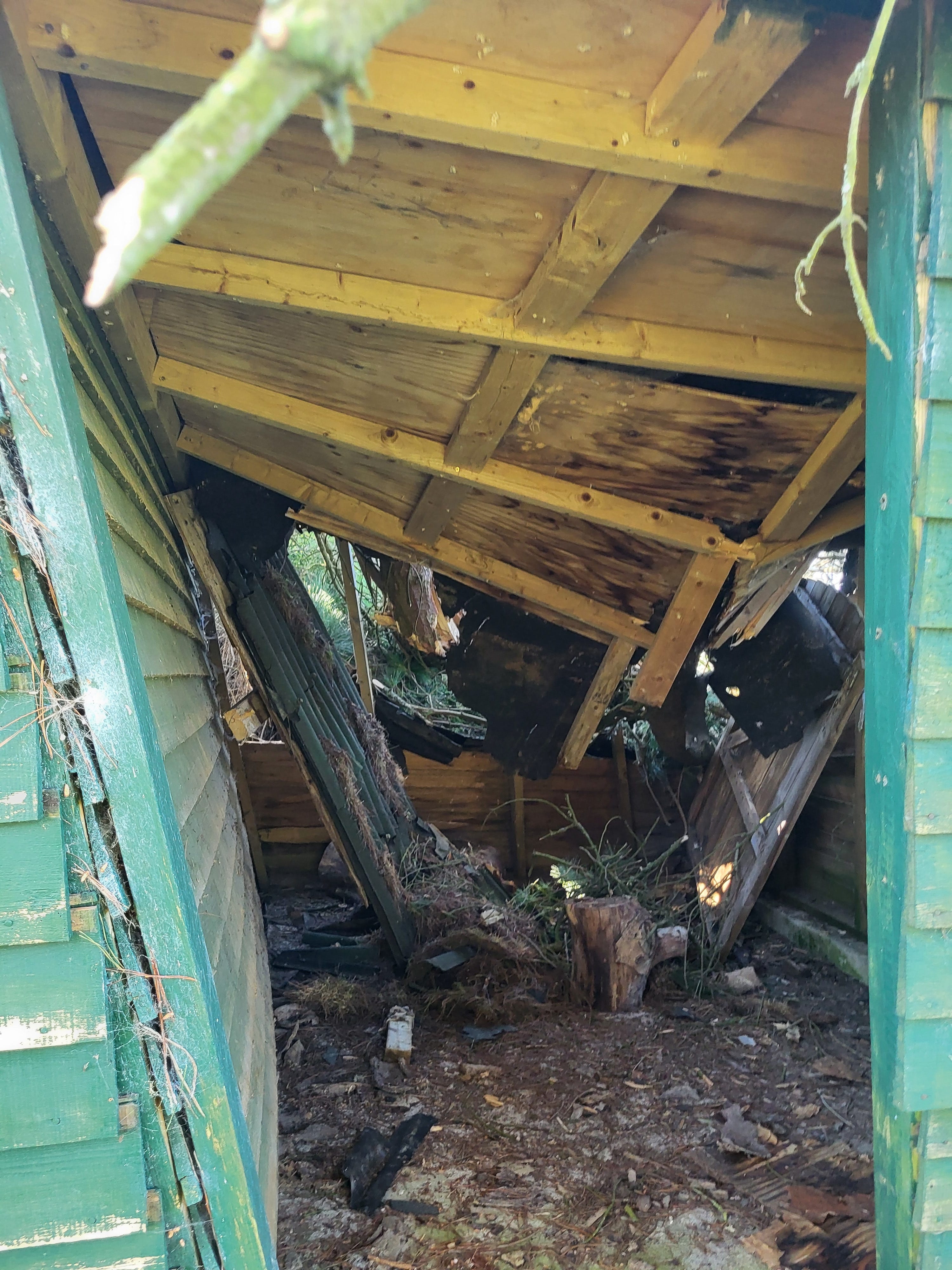
The gun that wasn’t, was about to fire all its ammunition. A resounding crack rends the air, like a thousand whips lashing in unison. Now, surrendering to gravity’s inexorable pull, the once heavy and hovering pine branch plunges downwards in an unstoppable momentum of powerful descent, shattering the roof of the shed below. Kit and I lock eyes in stunned silence, then spring to our feet and dash from the gazebo, hearts pounding. “So, the pine tree did have a strong opinion after all”, I said. Trees can talk.
Ever the foraging opportunist, I gathered some of the large pine cones attached to the fallen branch, and still unopened. Although they had been slightly faster, a few years ago I gathered about 10 similarly sized unopened cones from a stone pine. After drying had opened the cones, an absolute bounty of nuts of delicious plump nuts could be shaken out. I hoped for the same. I set them to dry on the car dashboard, and in just one day they had opened, creating a chaos of seeds.
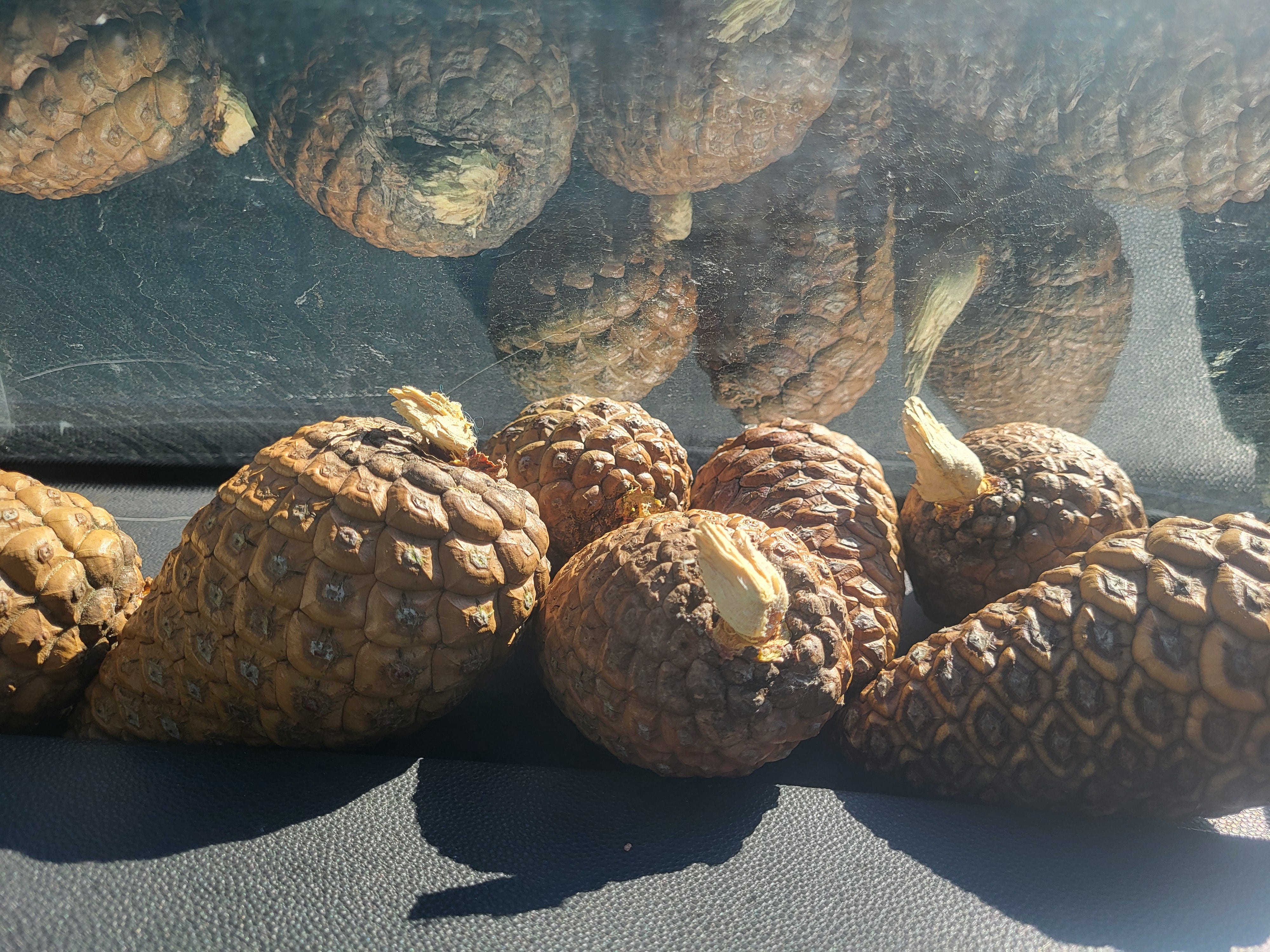
But, alas, they were small and the nuts tasted rancid.
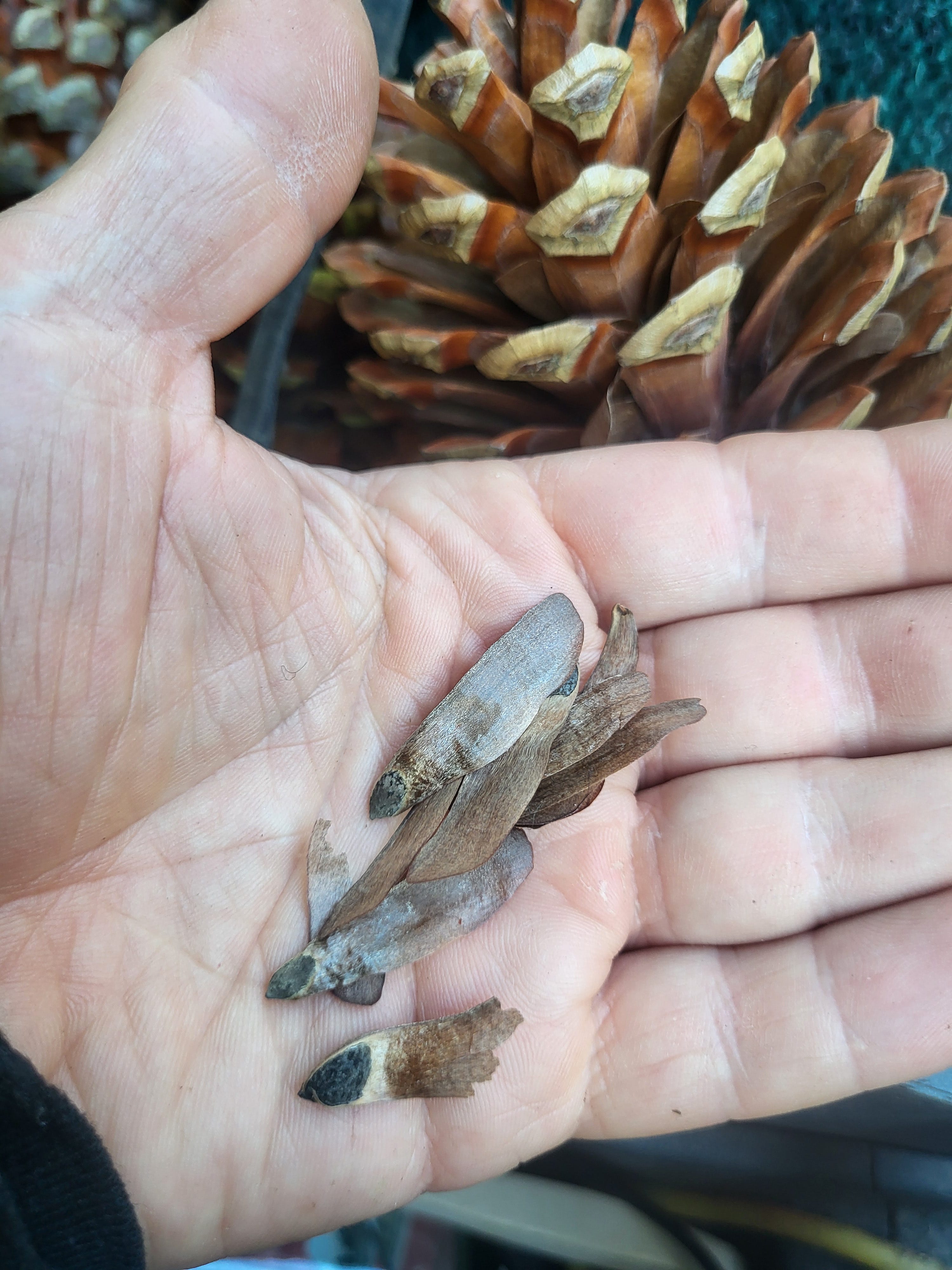
Prompted by this disappointment, I went to check the stone pine trees I knew. There were laden with cones, but although still attached to the trees they were all open, the nuts fallen to be gathered by bird and squirrel. But, pine, thank you for this memory and those it triggered. I am grateful.
So, what did Stephen Harding actually say about the deer, about the sense of encounter?
“Encountering means really meeting something in a way that goes beyond ones intellectual process. So normally in the West, particularly as a scientist as I am, one is taught to encounter, say, a tree, through ones ideas. So, how did the shape of that tree come about through the process of natural selection? What might the forces have been that made, say, the sycamore leaf, the shape it is? And, you know, it becomes a sort of an instinct when you are a scientist and an ecologist to look at nature in that sort of way. That's not encounter. Encounter is when that conceptual structure vanishes, and you actually meet the being as the being coming forth from itself as itself, revealing itself to you in a way that is beyond your intellect, in a way that's much more deeply intuitive, and much harder to express. In fact, scientific language is inappropriate for this kind of encounter, it's poetry that does it. It's a poetic encounter
Well, I had many kinds of this experience in my encounter with the muntjac deer I studied for my doctorate. And some of the moments I most remember would be when I was just waiting, and for many minutes or many...even an hour or more nothing would happen. And then, if I was lucky, a muntjac would appear and just stand, even for just a few seconds. And if I was lucky it would look in my direction. Then time stood still. Time stopped. And there was this infinite moment of meeting between myself and the muntjac. There was a sense of the being of the muntjac as a revelation, as if some kind of syrupy smoke was moving from the muntjac to me, infusing my whole being with muntjacness. So I could immediately understand the wholeness of the muntjac, and how they relate to the entire wood; I could have an intuitive perception of that in that instant, but [also] who the muntjac were as an animal with their ecological niche in the forest. And it went further than that. I could also get a sense of the ecology of the whole forest. It suddenly came into focus through the being of the muntjac. The whole came into my perception. And then if I was very lucky then that wholeness would spread out, and I would get a sense of the ecology of the entire earth. All those energies became concentrated in the muntjac, which for me symbolised all these different aspects of the ecology of the wood, and indeed of the earth herself.”
(Transcribed from The Sequel | Bullfrog Films: Daringly re-imagines a thriving, resilient civilization after the collapse of our current economies, drawing on the inspirational work of David Fleming.)
A Day 14 Question.
The bag of acorn flour was quite old. I found it at the very back of a cupboard about 2 months before the project began. It was instantly recognisable, as was from a year when I gathered about 100 kg of acorns to make flour. Indeed, all the flour had been packed in this way, resulting in about 2 other similarly sized bags, all used now (….or does one still lurk in some dark corner?). A bag’s contents can speak. This one said, “I bet you are wondering if I’ve gone rancid?”
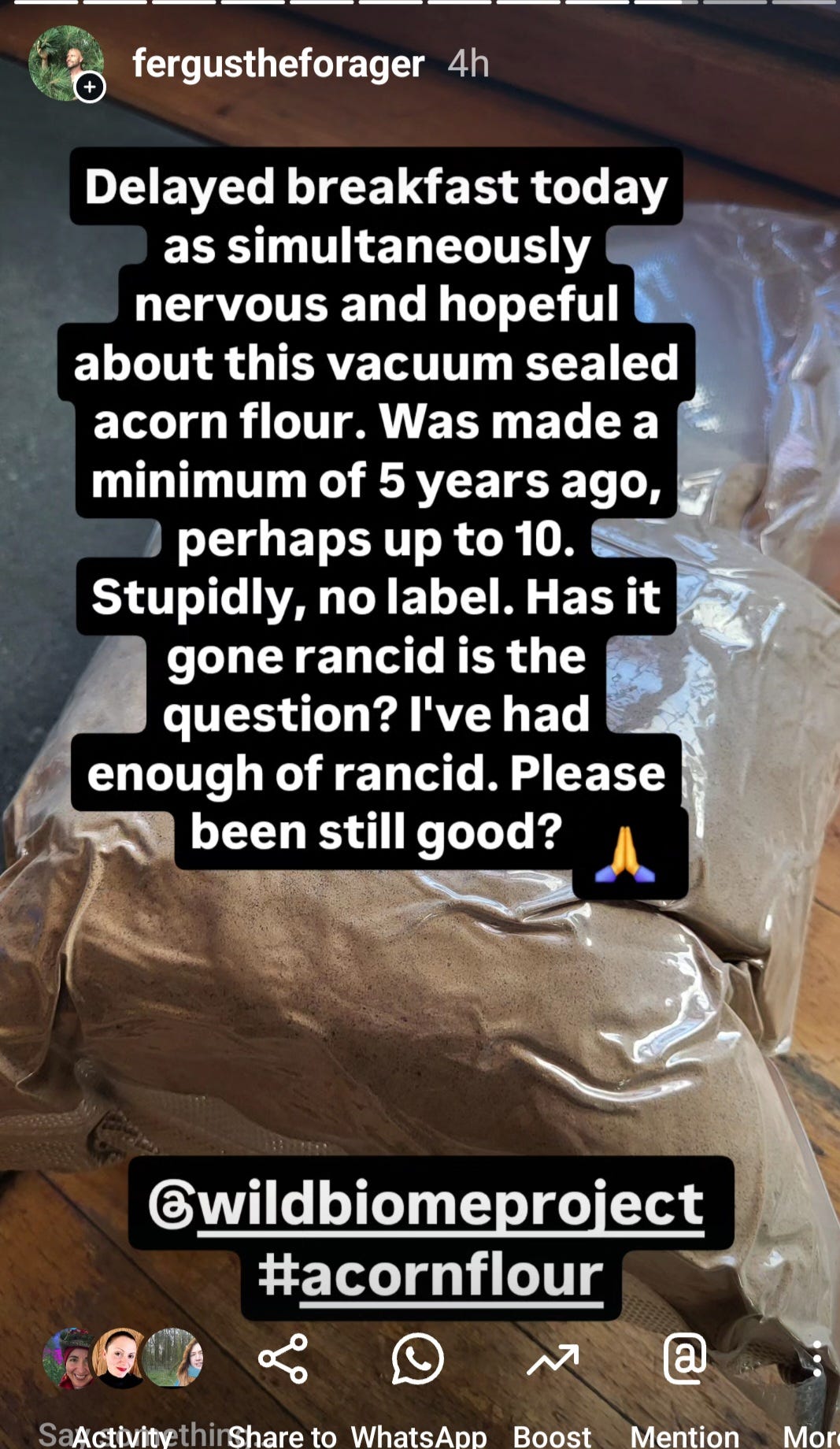
About 8 years ago I made something, remember dividing it between 2 very large kilner jars and deliberately stashing them away in the cool dark recesses of a store cupboard.
My memory is not always as I would like it to be! Hence……..
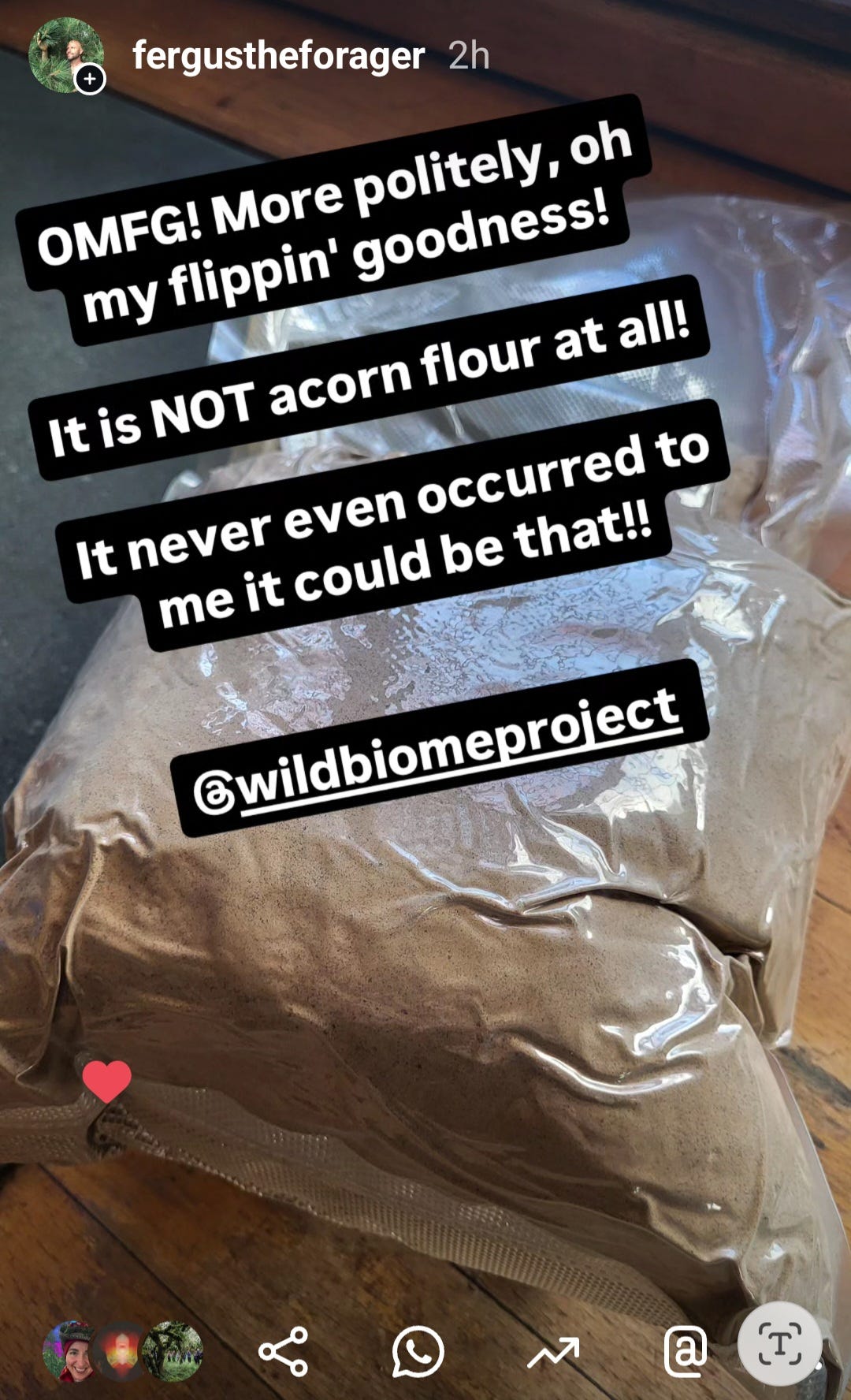
So the answer to the question, “Does 5-10 year-old vacuum sealed acorn flour stay good or go rancid?”, remains unanswered. Whereas, what happened to the content of those jars, does get an answer.
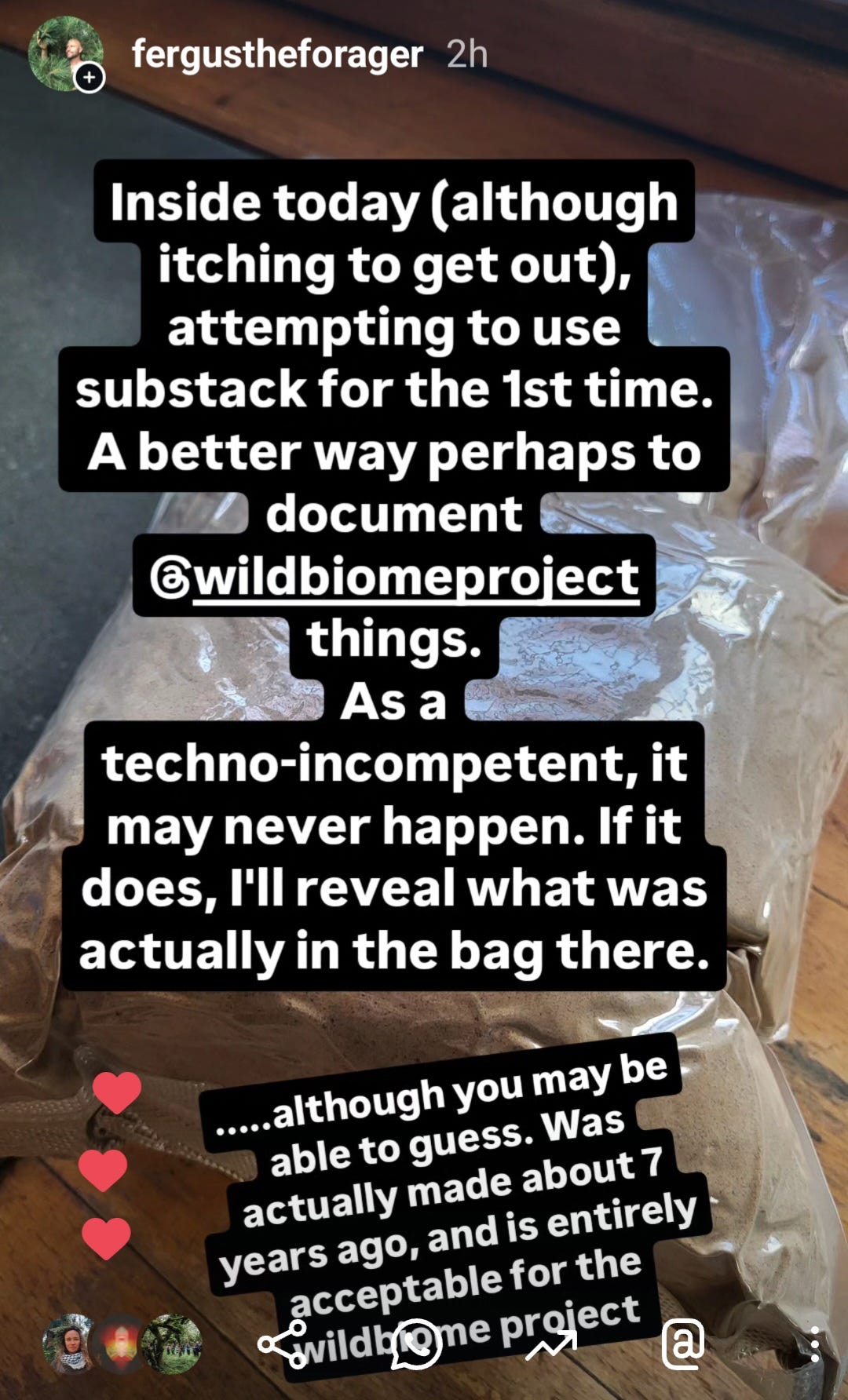
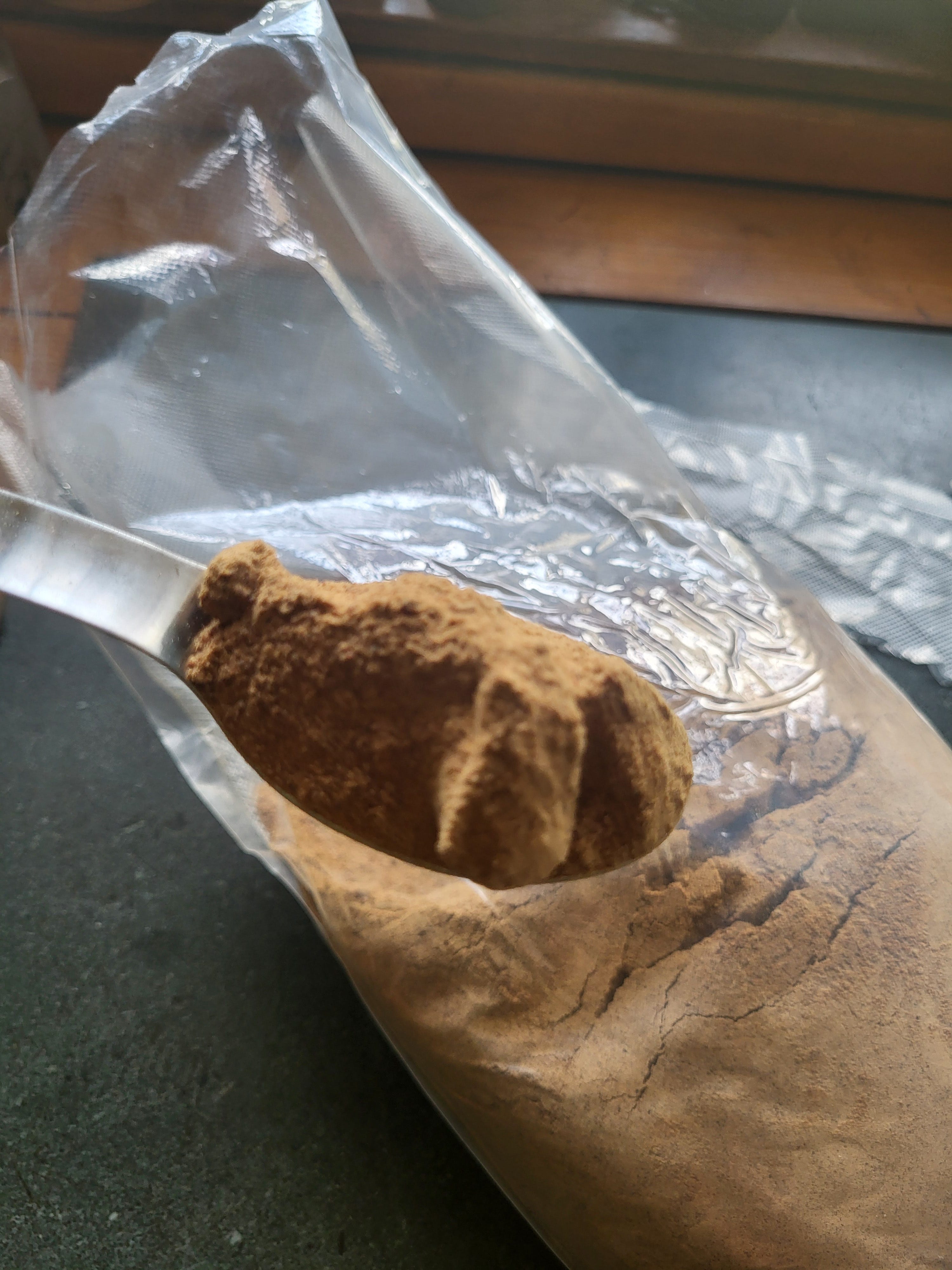
In terms of memory, sometimes it is good, and I remember that time well, as I was in the boom phase of the unpredictable boom and bust cycle of finding accidental meat (aka roadkill). So much so, in fact, that not only was my freezer full, a move to home canning of the cooked meat had not completely solved the storage issues created by such a bounty. So, what was in the bag?
What a surprise! The powdered meat from a whole roadkill deer!!
It has lasted this long, in the first place, because it was forgotten and suffering a case of mistaken identity, in the second, third, forth, fifth, sixth, and seventh place, ad infinitum, it is just gross. The flavour is fine, if in the right place, that right place isn’t biscuits, pastry, or many other places though, and the grossness, the chief objectionable aspect is the texture when incorporated into soups and sauces. Yes, pemmican seems all that’s left, although even then, I prefer to use fresh food processor-blitzed meat. Pemmican it will end up as, no doubt. A chance to try out some new recipes perhaps……
If you got this far, well done, even if you are a skip reader. Hopefully you found some of what’s here interesting, rather than being left thinking, “What a load of old waffle”, or even, “Jeeez, this guy is full of shit!” If the latter, after just experiencing my first run-to-the-loo-before-you-shit-your-pants diarrhoea moment of this project, I can confirm, whilst sparing you a ‘picture-as-proof’ that I am now totally devoid of, free from, and violently liberated from all shit! Fortunately too, in the right place, down the loo. I made it!
Only an hour ago, I was congratulating myself on the fact that after tripling the strength of my roasted dandelion root coffee substitute, it was almost fooling me into thinking it was a real coffee. Fool indeed!
But, let’s not end on a bum note.
My surname is Drennan. According to wikipedia, Drennan is a surname of Irish origin. Variations of the name are found primarily in Ireland, Scotland, and the United States. The surname is purportedly derived from the Gaelic Ó Droighneáin, Ó Draighnáin, or Ua Draighnen, meaning "descendant of Draighnen", or "descendant of blackthorn".” I have seen it also rendered as ‘place of the blackthorn’. This delights me on the odd occasion when I really do get stuck in a blackthorn thicket. “You are in the right place, your place”, I chuckle to myself while cursing the scratches from the thorns. I’m also delighted when I’m sent anything to do with blackthorn, especially a recipe, and, as a non-drinker, especially, too, one that doesn’t involve sloe gin. So thank you very much Izzy (Rights For Weeds), my fellow foraging and crafty friend, for just sending me the following medieval Italian blackthorn blossom soup recipe. As you say, this is definitely Wildbiome project adaptable. As we discussed, and agreed too, although the snowily white blackthorn blossomed hedgerows are metaphorically thawing as spring marches on, there are other blossoms to try: cherry, cherry plum, hawthorn…….. Perhaps next week…….
Blackthorn blossom soup